 info@udaanstudy.com

Study in USA
Interested in studying abroad?
Study in USA
The USA is home to some of the topmost international universities. Studying here can empower students with academic prowess, making them distinguished from their peers with similar backgrounds.
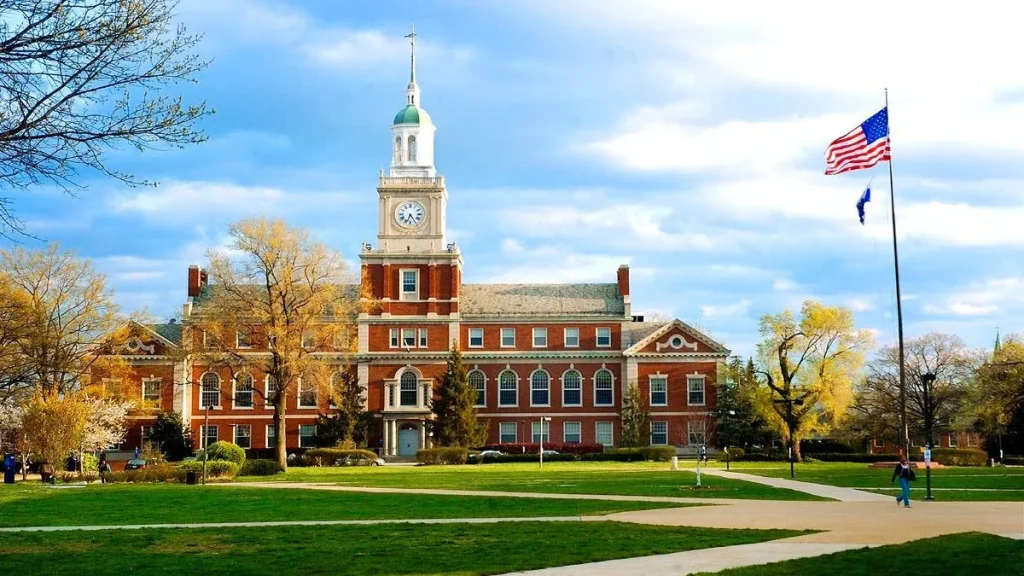
The top universities provide highly accredited professors, advanced technology and research facilities. International students planning to study in the USA can look forward to the American campus lifestyle. They are much like small student towns mixed with socialising and learning new skills under the same roof. Whichever part of America you choose for higher studies, you’ll generally find the company of Americans to be positively curious, friendly and humorous.
Universities and courses available

American culture has influenced the world with its trendy style of fashion, music and movies. Most students have grown fond of its vibrant and active lifestyle, making it the most sought after study destination. It’s not just about burying yourself in books but appreciating life outside the classroom as well, and that’s what you’ll get while pursuing academic goals in the US.
However, several processes are involved during college application, making it look overwhelmingly tiresome for international students. That’s why Expert Education is here to guide and help you prepare the documentations and applications required to study in the US.
Some of the universities and courses you can look forward to, for studying in the US:
Universities
- National University
- International University
- Northwood University
- Strayer University
- University of Southern California
- Pursue University
- New York University
- Michigan State University
- Boston University
- Ohio State University
Popular courses
- Computer Science & Information Technology
- Engineering
- Medicine
- Business Management
- Social Science
- Computer Science
- Life Science
- Liberal Arts
- Biotechnology
- Architecture
There’s a vast list of programs you can still choose to study in the US. There are student mentoring programs, free shuttle services and team sports that you will find easy to integrate into your campus life.
Some universities also have personalised health centres, career advisory services and accommodation officers.
The professors, too, are more than helpful when you need academic help. They are often available to speak with students after class, give expert advice and offload any worries about the course.
Fee, Scholarship, Cost of Living

A world of possibilities
Understanding the difference in cost of studying in the US can help you decide where you want to go. Public colleges charge between $35,000 and $45,000, while private colleges charge from $50,000 to $75,000 annually. However, most colleges don’t have a standardised government fee system as it depends on the college and the course selected.
Cost of undergraduate degrees in the US
- Public university: $25,000-$35,000 per year
- Private college: $30,000-$45,000 per year
Sometimes even higher: $50,000-$55,000 per year
- Community colleges: $2,500-$3,000 per year
Community colleges usually provide award certificates and associate degrees. They do not offer a bachelor’s degree because community colleges offer two-year courses, whereas universities offer four-year undergraduate courses. However, you can use the associate’s degree to qualify for the first half of your bachelor’s degree and later apply for a master’s degree.
Cost of a postgraduate degree in the US
- Public university: $20,000-$35,000 per year
- Private college: $35,000-$50,000 per year
Scholarship to study in the US
When it concerns studying in the US, getting a scholarship can prove significantly helpful for international students. It’s crucial to know that scholarships are competitive and take time for approval. You will find it easier to apply for a scholarship with professional help from Expert Education.
Students with good grades and who are athletically inclined are likely to get scholarships. Additionally, scholarships are available for art, dance and music.
There are multiple funding opportunities that you can make use of, to name a few:
- Fulbright Foreign Student Program
- QS Undergraduate Scholarship
- QS Leadership Scholarship
- QS Leadership Scholarship for Excellence
- Golden Key Graduate Scholar Award
- IEFA Non-Government Scholarship
A way of life with growth and opportunity
The cost of living in the US can differ from location to location, and it’s vital to secure savings related to primary and daily needs. From emergencies to groceries, clothes, water, electricity, internet, books and study material, among other essentials, an international student must consider an approximate living cost of $10,000 to $12,000 per year in the US.
Although most colleges offer on-campus residence to international students, commonly called the ‘dorm room’ or dormitory. Students usually share a room with two to three other students with facilities like the internet, electricity, water, etc. The cost of campus accommodation ranges between $5000-$8000 per year.
Alternatives are non-campus residences, where the cost might be significantly higher. The usual charge ranges from $6,000 to $15,000 per year based on the location and apartment chosen.
When it comes to travelling, you can avail vehicle rental facilities, or public transport like cabs, trains, and buses. The cost of transportation can depend on where you are staying. However, to share an estimate, you would be spending approximately $30-$50 per month on a bus and train pass. For total transportation facilities, expect an average of $100-$300 per month depending on your budget, frequency and type of transport used.
Admission Process
Just like American students, you will have to arrange for and submit your academic transcripts. This requirement is part of your application for admission to any university or college. If you’re wondering, academic transcripts are; they’re official copies that represent your academic work. In the U.S. the transcript includes your “grades” and “Grade Point Average” or GPA. The GPA is a measurement of your academic achievement. Most often, international students may find the grading system and GPA confusing with varying interpretation of the grades. A US university may interpret the GPAs of two students differently based on the schools they’ve studied. For instance, a student coming from a regular high school and a student who attended a renowned school with a challenging curriculum. Both their GPAs will be reviewed differently by the education institution in the US. That said, you may also make sure to identify a US equivalent education institute of the level of education you attended in your home country. Pay close attention to the admission requirements of different universities. Finally, meet your education consultant to ensure that you are meeting all the requirements. American colleges and universities include different types of applications during the admission process. Here are some of the application deadline processes that may differ between college and university. Early Decision – The early decision application timeline is about ten months before the commencement of a course. It is usually set between the 1st and 15th of November. Once you get accepted at a particular university or college, you will be expected to halt all other admission applications. Early Action – The early action timeline allows you to submit your college application early. You may apply at multiple colleges as you can expect an early response after you apply at the chosen college. Early action timelines are set between the 1st and 15th of November. Common Application – The common application allows you to apply to multiple colleges online. The application process starts on 1st August and ends in January, at least seven months before commencing at the university. At times, the deadline is stretched till March. Regular Application – The regular application process is based on the timelines set by the universities. The applicant is allowed to apply to multiple institutions within the timeframe set by the universities, acceptance of which is provided between 1st January and 1st March.
Study in USA FAQs
What type of US visa is issued to an international student?
A student (F and M) visa is issued to a new student up to 120 days before the start date of the course enrolled. The applicant cannot enter the United States on this student visa more than 30 days before the start date.
For a continuing student, the student (F and M) visas can be issued anytime as long as the student is enrolled at a SEVP-approved school or institution and in SEVIS. Continuing students are allowed to enter the United States at any time before the course begins.
What is SEVIS and how is it related to my USA study visa process?
SEVIS refers to the Student and Exchange Visitor Information System. Universities that issue I-20 forms to international F and M students have to fill the student’s information into the SEVIS database. These details can be accessed by the US consulates worldwide. The student visa cannot be issued if this information is not entered into the database.
What is an F-1 and M-1 student visa?
The F-1 visa allows an international student to enter the United States full-time at an accredited college, university, academic high school, elementary school, or other academic institutions. On the other hand, an M-1 visa allows students in vocational or other non-academic programs, other than language training, to enter the United States.
What privileges will I enjoy on an F-1 student visa?
- You can come to the United States to study full time in a degree or certificate program.
- You can transfer to a different school or switch academic programs after notifying the USCIS.
- You can work part-time on-campus.
- Working off-campus may be allowed, depending on eligibility requirements and training.
- You can travel within the United States or abroad until the completion of your studies.
- You can bring your spouse and children to the United States on an F-2 visa.
What privileges will I enjoy on an M-1 student visa?
- You can enter the U.S. as a full-time non-academic or vocational student.
- You can transfer from one school to another if required.
- You are allowed to work part-time on-campus.
- You may also be allowed to work legally off-campus but on an assignment related to your field of study.
- You can travel within the United States or abroad until the completion of your studies.
- You can apply for M-2 visas for dependents accompanying you to the United States.
What are the documentation requirements for a USA study visa process?
You are required to submit the following documents:
- Valid Passport for travel to the United States
- Nonimmigrant Visa Application, Form DS-160 confirmation page
- Photo – to be uploaded while completing the online Form DS-160. Alternatively, a printed photo can be submitted as per the photo requirements mentioned.
- Application fee payment receipt, if payment is required before your interview.
- Certificate of Eligibility for Nonimmigrant (F-1) Student Status – For Academic and Language Students
- Form I-20 or Certificate of Eligibility for Nonimmigrant (M-1) Student Status for Vocational Students
- Form I-20 – Your school will send the Form I-20 once they have entered your information in the SEVIS database.
Additional documentation may be required concerning academic preparations. Our team of visa process counsellors will help you with all the necessary details.
What if my student visa expires before completing my program?
If your student visa expires before completing your program or course, you may be allowed to renew your F-1 student visa. To get started with the renewal process, you can re-apply for the visa from your home country, another country, at a US embassy or consulate. Although, applying from your home country is always preferable. For more information, we can assist you with your visa renewal queries.