 info@udaanstudy.com

Study in Europe
Study in Denmark
Denmark, known for its progressive society, innovative education system, and high quality of life, stands out as an excellent destination for Nepalese students seeking to broaden their academic horizons. Here, we delve into the reasons why studying in Denmark can be a rewarding choice for students from Nepal.
Key Facts to Study in Denmark
1. Language Spoken
Denmark has two primary languages for education: Danish and English. While many undergraduate programs are taught in Danish, a large number of Master’s and PhD programs are available in English, making it accessible for international students. Danes speak English fluently, so living and studying in Denmark as a non-Danish speaker is relatively easy.
2. Cost of Study
EU/EEA and Swiss students: Education is free of charge at public universities.
Non-EU/EEA students: Tuition fees apply and typically range from DKK 45,000 to DKK 120,000 (approx. USD 6,500 to 17,500) per year, depending on the university and program.
3. Source of Funding
International students can fund their education in Denmark through:
Government Scholarships – Some universities offer tuition waivers or monthly grants.
Part-time Jobs – Students can work up to 20 hours per week during the academic year and full-time during holidays.
Private Funds – Personal or family funding is also a common source.
4. Exams Required
To prove English language proficiency, students typically need to submit scores from:
IELTS – Minimum overall score usually required is 6.5
PTE Academic – Alternative to IELTS; minimum score requirements vary by institution.
Some programs may have additional academic requirements depending on the level and field of study.
5. Degrees Offered
Danish universities offer a full range of academic degrees:
Bachelor’s Degree (3 years)
Master’s Degree (2 years)
PhD Programs (3–4 years)
All degrees follow the Bologna Process, making them internationally recognized and easily transferable.
6. Intakes
The main intake is in September for most programs. Some institutions may also offer a February intake, particularly for Master’s programs, but options are more limited.
7. Visa
Non-EU/EEA students must apply for a Danish student visa (Residence Permit). To qualify, students must:
Be admitted to a full-time higher education program
Show proof of sufficient funds (approx. DKK 6,500 per month)
Have valid health insurance
Submit biometric data and other supporting documents
The visa typically allows part-time work and can lead to a 6-month job search extension after graduation.
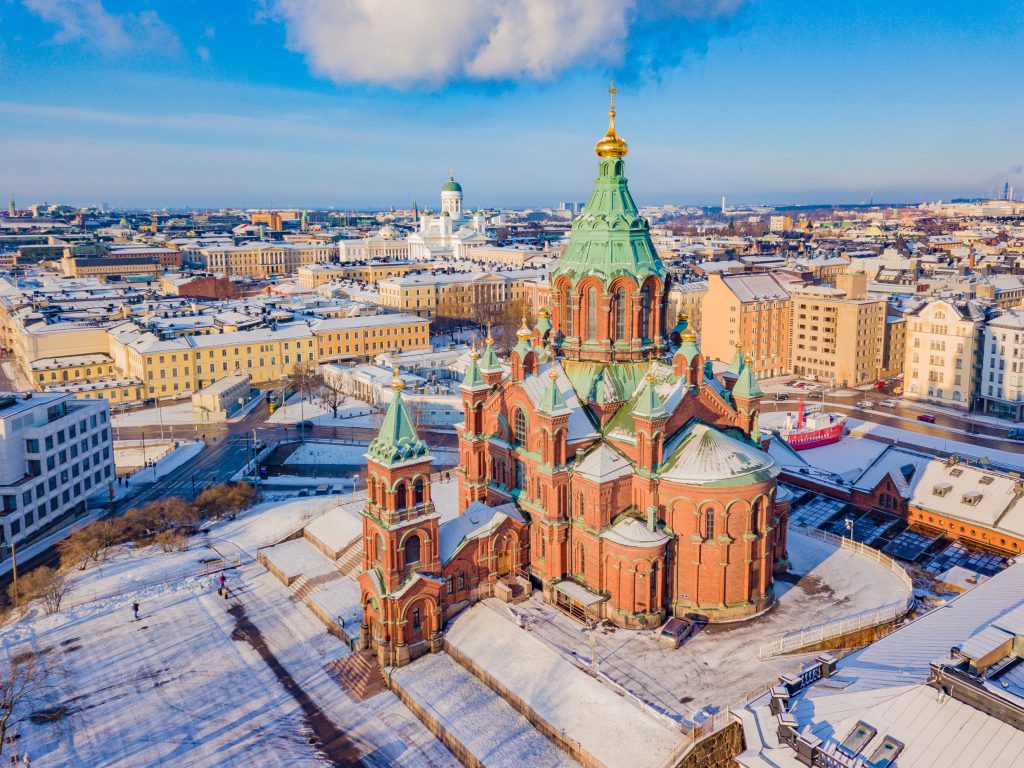
Study in Finland
Studying in Finland offers international students a unique combination of high-quality education, innovative teaching methods, and a safe, welcoming environment. Renowned for its world-class universities and student-centered learning approach, Finland provides a wide range of English-taught programs at the bachelor’s, master’s, and doctoral levels. The country places strong emphasis on research, sustainability, and practical skills, making its graduates highly employable worldwide. While tuition is free for EU/EEA students, non-EU/EEA students benefit from generous scholarships and affordable living compared to other Nordic nations. With opportunities for part-time work, post-study visas, and exposure to cutting-edge technology and design, Finland is an excellent destination for students seeking academic excellence and a high quality of life.
1. Language Spoken
Finland has two official languages: Finnish and Swedish, but for international students, the primary language of instruction is English. Over 500 degree programs are offered in English across Finnish universities, especially at the Master’s and PhD levels. While daily life often involves Finnish, almost all Finns speak English fluently, making it easy for international students to live and study comfortably. Many universities also offer free Finnish language courses to help students integrate better and increase their employability.
2. Cost of Study
EU/EEA students: Higher education is tuition-free for EU/EEA and Swiss students.
Non-EU/EEA students: Tuition fees apply and usually range between EUR 4,000 to EUR 18,000 per year, depending on the program and university.
Living Costs: Students should budget around EUR 700 to 1,200 per month for accommodation, food, transport, and other personal expenses. Finland is known for its high quality of life, though living costs are moderate compared to other Nordic countries.
3. Source of Funding
Students in Finland have several ways to fund their education:
Scholarships: Most Finnish universities offer scholarships or tuition fee waivers for non-EU/EEA students. Some offer full scholarships, covering both tuition and living expenses.
Part-time Jobs: Students can work up to 30 hours per week during the academic term and full-time during holidays. Knowledge of Finnish is helpful for finding part-time work, though some English-speaking jobs are available.
Personal/Private Funds: Students must provide proof of EUR 560/month (around EUR 6,720 per year) for living expenses when applying for a visa.
4. Exams Required
For English-taught programs, students need to prove their English proficiency through tests such as:
IELTS – Minimum overall score typically required is 6.0–6.5
PTE Academic – Commonly accepted, with minimum scores depending on the institution
TOEFL iBT – Another accepted option, generally requiring 79–92 points
Some programs (especially in engineering or technology) may also require entrance exams or previous coursework in specific subjects.
5. Degrees Offered
Finland offers all levels of internationally recognized degrees:
Bachelor’s Degrees: Usually 3 to 4 years, with a growing number of English-taught options.
Master’s Degrees: 2 years, with wide availability in English.
Doctoral/PhD Programs: Typically 4 years, often fully funded with monthly stipends.
Finnish education is known for its research orientation, student-centered learning, and innovation-driven approach.
6. Intakes
The main intake is in August or September.
Some universities may offer a January intake, especially for specific Master’s or UAS (University of Applied Sciences) programs.
Application period: Usually starts in December and ends in January for the autumn intake. Students are advised to check individual university websites for specific deadlines.
7. Visa
Non-EU/EEA students must apply for a Residence Permit for Studies before entering Finland.
Requirements include:
Admission letter from a Finnish university
Proof of sufficient funds: At least EUR 560 per month (EUR 6,720 for one year)
Proof of tuition fee payment (if applicable)
Health insurance that covers medical expenses up to EUR 40,000
Valid passport and supporting documents
Visa Benefits:
Work part-time (up to 30 hours/week)
Extend stay for up to 1 year after graduation to search for a job or start a business
Processing time: Usually 1–2 months, so early application is crucial.
Study in Europe FAQs
Do Denmark and Finland offer English-taught programs?
Yes, both countries offer a wide range of Bachelor’s, Master’s, and PhD programs in English, making them accessible for international students who don’t speak the local language.
Are tuition fees the same in Denmark and Finland?
No. Tuition is free for EU/EEA students in both countries, but non-EU/EEA students must pay fees—typically higher in Denmark (DKK 45,000–120,000/year) than in Finland (EUR 4,000–18,000/year).
What scholarships are available in Denmark and Finland?
Both countries offer merit-based scholarships for non-EU students. Finnish universities often provide partial or full tuition waivers, while Danish institutions offer government-funded scholarships and grants.
Can international students work part-time during studies?
Yes. In Denmark, students can work up to 20 hours per week; in Finland, up to 30 hours per week. Full-time work is allowed during holidays in both countries.
What are the living costs in Denmark and Finland?
Living costs are moderate by Nordic standards. Expect to spend around DKK 6,000–8,000/month in Denmark and EUR 700–1,200/month in Finland, depending on lifestyle and city.
Is a language test required for admission?
Yes. Most programs require proof of English proficiency via IELTS, PTE, or TOEFL, with minimum scores typically ranging from 6.0–6.5 (IELTS) or equivalent.
Can students stay after graduation for work opportunities?
Yes. Denmark allows a 6-month job-seeking visa, and Finland offers a 1-year post-study residence permit to find employment or start a business after graduation.